Word Solitaire: Associations
NewPubCoWord
4.6344.00 Reviews
- Version
- 1.5.1
- Installs
- 500.00K
- Age Rating
- Everyone
Screenshots
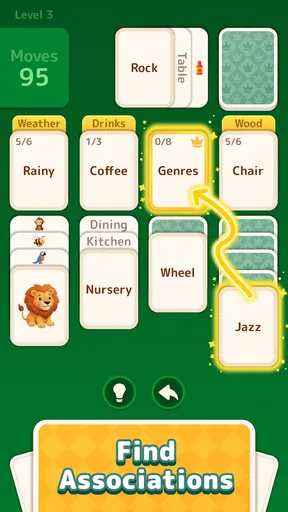
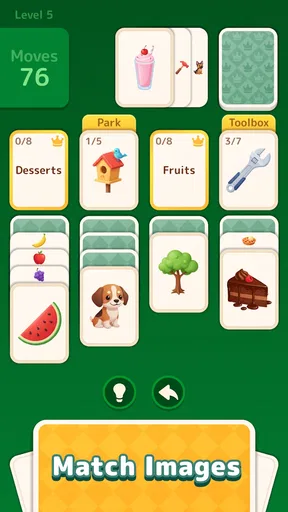
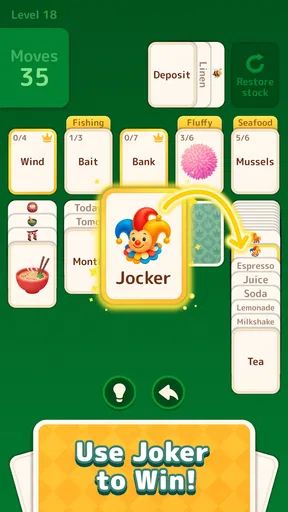
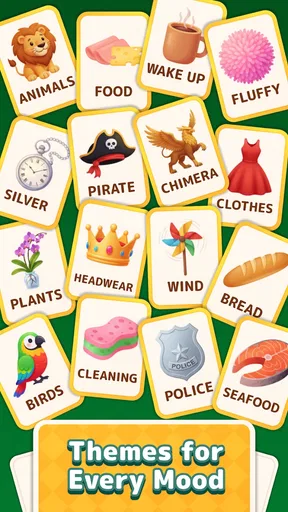
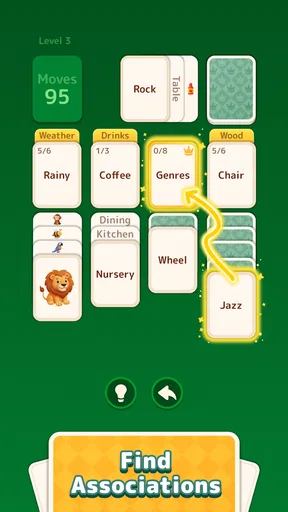
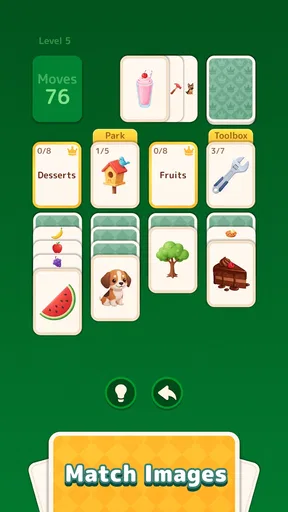
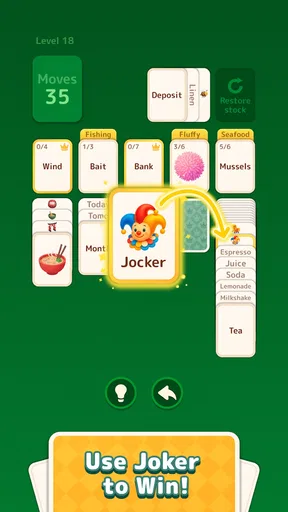
Our Review of Word Solitaire: Associations
 Analysis by Appyee
I like the idea behind Word Solitaire: Associations because it asks me to do more than find words or clear a familiar card layout. The appeal is in connecting the two: I have to think about a word sequence while also making choices in a solitaire-style puzzle. That combination gives the game a clear identity, though it also means it will suit people who enjoy a little language-based problem-solving better than players who want a purely automatic, no-thought time killer.
It is a free word game from NewPubCo, rated for Everyone, and its name gives a fair sense of the central twist without explaining away the puzzle. The game has a 4.7 average from around 4.9K ratings, with 100K+ installs. Those figures suggest that it has found an audience, but what matters more to me is whether the central idea stays enjoyable after the novelty wears off. My answer is yes, provided you like pausing to consider how words relate rather than simply tapping through cards as quickly as possible.
Why the card-and-word combination works
The game’s strongest quality is how the solitaire structure gives word associations a practical purpose. In a conventional word puzzle, I might search for a word or fit letters into a fixed answer. Here, the card sequence makes the connection between one word and the next part of the task. That changes the rhythm: I’m not only asking, “What word can I make?” but also, “Does this choice help the sequence make sense?”
That extra question is a useful source of difficulty. A word can look promising on its own, yet the follow-up association may make the route less obvious. I find that this encourages me to scan the available choices before committing, instead of treating each move as an isolated answer. It’s a small but meaningful distinction from standard solitaire, where planning tends to focus on exposing or organizing cards, and from many word games, where the main aim is to recognize or build a target word.
The result is best approached as a compact thinking break. I would play a round when I have a few spare minutes and want to pay attention to something without starting a long story or a competitive match. It is also a reasonable fit for people who enjoy word associations but want more structure than a loose chain of guesses. The cards give the thinking a direction, while the words stop the play from feeling like an ordinary solitaire routine.
Where I would slow down and plan
A practical tip is to look at the whole visible arrangement before making the first move that seems obvious. When a puzzle asks for linked words, the easiest immediate choice may not be the most useful one for the next connection. I try to weigh a move by what it opens up as well as by whether it works right now. That habit makes the game feel more strategic and can help avoid burning a limited hint on a choice I could have reconsidered.
Hints are useful when I’m genuinely stuck, but I would treat them as a backstop rather than a way to speed through every puzzle. Since they are limited, spending one on a moment of mild uncertainty can leave me short when the association is truly obscure. I get more value by first checking whether I have overlooked a natural connection between the words already in play. This also keeps the satisfying part of the game intact: solving the link myself rather than merely following instructions.
The game’s word-based challenge can also make a puzzle feel different depending on how familiar I am with the possible associations. If I recognize a connection quickly, the card decisions are the main interest; if I don’t, I may need to test several ways of thinking about the words. That variation is a strength for players who enjoy flexible thinking, but it may frustrate someone who expects every answer to be a direct vocabulary test with one immediately apparent clue.
How it fits into a normal day
I can see this working well during a quiet coffee break or while waiting for an appointment: I can focus on a small puzzle, pause when I need to, and return to my day without having to remember a complicated story. It is not the kind of game I would choose when I have only a few seconds and need something entirely mindless. The word links ask for attention, and the solitaire decisions reward taking a moment rather than tapping at random.
Compared with classic solitaire, this game gives language a larger role and asks for associative reasoning alongside card planning. Compared with a crossword or a word-search game, it is less about filling a grid or scanning a letter field and more about judging how one answer leads to another. If I wanted a familiar card routine, traditional solitaire would be the simpler choice; if I wanted a word puzzle with a clearly defined clue, a crossword might be better. I’d choose this one when I want those two kinds of thinking blended into a single activity.
It is also worth being realistic about who may not enjoy it. Players who dislike wordplay, find open-ended associations irritating, or want constant action are unlikely to get the best from it. Likewise, someone who prefers a simple card game with no language layer may find the central twist gets in the way rather than adding interest. The right audience is not every casual-game fan, but people who like the feeling of spotting a connection and then using it to make a careful next move.
Getting Started with a Twist
As soon as I opened Word Solitaire: Associations, I was greeted with a simple yet elegant interface. The game doesn't just throw you into the deep end; instead, it eases you in with a helpful tutorial. This was perfect for me because, while I love word games, I'm not a wordsmith by any means. The tutorial guides you through the basics, ensuring you understand the unique mechanics of this game.
The objective is straightforward: arrange the cards in a sequence to form words. But here’s where it gets interesting—each word must relate to the next. This added layer of complexity makes the game far more engaging than your typical solitaire or word puzzle.
That opening explanation is helpful because the hybrid rules are the part I would want to understand before deciding whether to keep playing. I’d take the tutorial at a steady pace instead of skipping through it, then use the first puzzles to learn what counts as a useful association. The key question for a new player is not only how to make a word, but how to keep the sequence moving. Once that distinction clicks, the format becomes much easier to judge on its own terms.
Features That Keep You Hooked
One of the standout features is the sheer variety of levels. I’ve played numerous games that start strong and then fade out, but Word Solitaire: Associations keeps things fresh with new challenges as you progress. The game also offers daily challenges and special events that can earn you additional rewards. It’s these little extras that keep me coming back for more.
Another feature I adore is the hint system. Let’s be honest, we all get stuck sometimes, and having the option to get a little nudge in the right direction is a lifesaver. Of course, you have to use these hints wisely, as they are limited. It adds a strategic element to the game that I really appreciate.
Those recurring activities make the game easier to fit into a routine, but I wouldn’t let them dictate how I play. If I have time for only one short session, I’d rather enjoy a puzzle at my own pace than feel obliged to return just to keep up with a schedule. For me, the extra challenges are most appealing when they offer a fresh reason to think about the same basic word-and-card idea, not when they turn a relaxing pastime into a checklist.
One question people often have about a free game is whether they can enjoy it without spending. The game is free to download, and it includes optional in-app purchases priced from $1.99 to $119.99 per item. I’d begin without buying anything and see whether the available play suits me; the presence of purchases is a reason to check carefully before confirming any transaction, especially if a younger player uses the device. The age rating is Everyone, but that does not make purchase settings irrelevant for families.
The Social Connection
If you’re anything like me, playing games is even more fun when you can share the experience with friends. Word Solitaire: Associations allows you to connect with friends and compete on leaderboards. There’s something incredibly satisfying about seeing your name climb up the ranks, especially when you know your friends are watching!
And if you don’t have friends playing yet, don’t worry! The game’s community is vibrant and welcoming. You can join discussions, share tips, or even just boast about your latest high score. It’s nice to feel part of a community, especially in a game that’s as mentally stimulating as this one.
The competitive side gives the puzzle a different kind of motivation: instead of focusing only on whether I solved a sequence, I can also care about how my result compares with other players. That will appeal to people who like a shared goal, though it is not essential to the game’s main attraction. If leaderboards make you rush or turn a relaxing session into pressure, I’d ignore that layer and treat the word puzzles as a personal challenge.
Design and Usability
Visually, the game is a treat. The graphics are crisp and clean, and the user interface is intuitive. I never felt overwhelmed by menus or unnecessary options. Everything is where it should be, and the game runs smoothly, even on older devices. Trust me, there’s nothing worse than a laggy game, but thankfully, that’s not an issue here.
The sound design is also worth mentioning. The background music is soothing and helps create a relaxing atmosphere, while the sound effects add a nice touch without being intrusive. You can easily toggle the sounds on or off, depending on your mood.
For anyone checking compatibility, the current version is 1.5.1 and the minimum Android requirement is 6.0. I’d still think about the kind of screen and setting I’ll use: word links are easier to consider when I can comfortably read the cards, and a noisy or distracted moment can make a thoughtful puzzle feel less pleasant. Muting the sound is a simple option when I want to play in a waiting room or another quiet place without giving up the visual part of the experience.
One limitation I would keep in mind is that a clean presentation and a gentle soundtrack cannot make every association equally intuitive. When I don’t see a connection, the pause can feel less like a clever challenge and more like a stall. That is the trade-off built into a game that relies on linking ideas: the same flexibility that makes a successful sequence satisfying can make an unfamiliar connection feel subjective or hard to spot. Players who need every puzzle to have an obvious clue may prefer a more direct word game.
Final Thoughts
Overall, Word Solitaire: Associations is a delightful blend of strategy, creativity, and relaxation. Whether you’re a word nerd like me or just someone looking for a new game to pass the time, this app is definitely worth checking out. The combination of solitaire mechanics with word puzzles is both innovative and entertaining, and the game’s attention to detail ensures a smooth experience.
So, if you're ready to dive into a game that's as rewarding as it is challenging, give Word Solitaire: Associations a try. Who knows, you might just find your new favorite pastime!
Verdict
Strengths of Word Solitaire: Associations
- Unique blend of word and card gameplay.
- Visually appealing with smooth animations.
- Challenging levels enhance cognitive skills.
- Frequent updates with new puzzles.
- Offline mode available for on-the-go play.
Limitations of Word Solitaire: Associations
- Ads can be intrusive during gameplay.
- Limited hints without in-app purchases.
- Some levels may feel repetitive.
- Occasional bugs in certain devices.
- Requires internet for some features.
Other Releases by NewPubCo
View All


Similar Picks in This Category
View All
Word Search - Word Puzzle Game
Bluetile4.8

Word Search Quest - Puzzles
Blackout Lab4.8

CodyCross: Crossword Puzzles
Fanatee, Inc.4.7

Words of Wonders: Crossword
Fugo Games4.9

Wordscapes: Word puzzle game
PeopleFun4.7

Word Search Explorer
PlaySimple Games4.9
Frequently Asked Questions
What is the main objective of Word Solitaire: Associations?
Word Solitaire: Associations combines the classic card game solitaire with word puzzle challenges. The main objective is to strategically arrange cards to form meaningful words, progressing through levels by solving increasingly complex word associations. This unique blend of gameplay offers both a relaxing and intellectually stimulating experience.
Is Word Solitaire: Associations free to play?
Yes, Word Solitaire: Associations is free to download and play. However, it offers in-app purchases for players who wish to enhance their gaming experience. These purchases can include hints, additional levels, or customization options, allowing players to tailor the game to their preferences.
Can Word Solitaire: Associations be played offline?
Yes, Word Solitaire: Associations can be enjoyed offline, making it an excellent choice for users who want to play without an internet connection. This feature ensures that players can continue to enjoy the game while traveling or in areas with limited connectivity.
What age group is Word Solitaire: Associations suitable for?
Word Solitaire: Associations is suitable for a broad range of ages, typically recommended for those aged 12 and above. Its combination of word puzzles and solitaire mechanics can appeal to both young and adult players who enjoy challenging their vocabulary and strategic thinking skills.
Are there any accessibility features in Word Solitaire: Associations?
Word Solitaire: Associations includes accessibility features designed to enhance the gaming experience for all players. These may include adjustable text sizes, color contrast settings, and audio cues, ensuring that players with varying needs can fully enjoy the gameplay.
Play our best games!


